Price tells you surprisingly little about how long a piece will last. Some of the best-made clothes we’ve handled come from two-person studios selling through Instagram; some of the flimsiest carry big-brand labels. The good news is that quality leaves clues, and you can read most of them in under a minute, in a shop or the moment a parcel arrives.
Here is the checklist our editors use.
1. Start with the fabric, not the look
Hold the fabric up to the light. If you can clearly see your hand through a top that isn’t meant to be sheer, it will likely thin and lose shape quickly. Then scrunch a corner in your fist for five seconds and let go: good fabric relaxes back, while cheaper fabric holds deep creases.
Check the composition label, too. Natural fibres (cotton, linen, wool, silk) and well-made blends usually breathe and age better. A small percentage of elastane adds stretch and recovery; a high percentage of polyester in a summer dress often means a hot, clingy wear.
2. Turn it inside out
The inside of a garment is where corners get cut. Look at the seams:
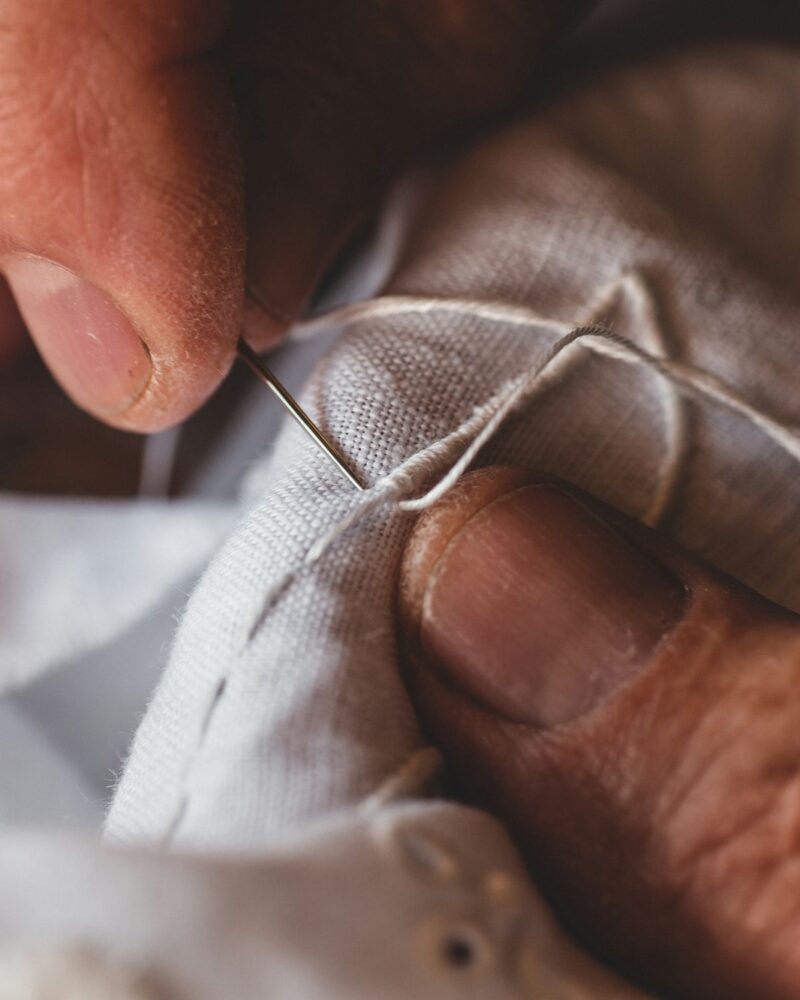
- Stitch length: small, tight, even stitches hold better than long, loose ones. Tug gently either side of a seam. If you can see gaps opening, walk away.
- Seam finish: overlocked (serged) edges are standard; French seams, where the raw edge is enclosed, are a sign someone took their time.
- Seam allowance: a generous strip of fabric beyond the stitching means the piece can be let out or repaired later.
3. Check pattern matching
On stripes, checks and large prints, look where the pieces meet: the side seams, the centre front, the pockets. When the pattern lines up, the maker spent extra fabric and extra time cutting carefully. It’s one of the clearest signs of care you can see from the outside.
4. Buttons, zips and the small hardware
Buttons should be sewn on firmly, ideally with a little “shank” of thread so they sit above the fabric and button easily. A spare button inside is a small kindness. Zips should run smoothly without catching, and on trousers and skirts a metal zip usually outlasts a lightweight plastic one.
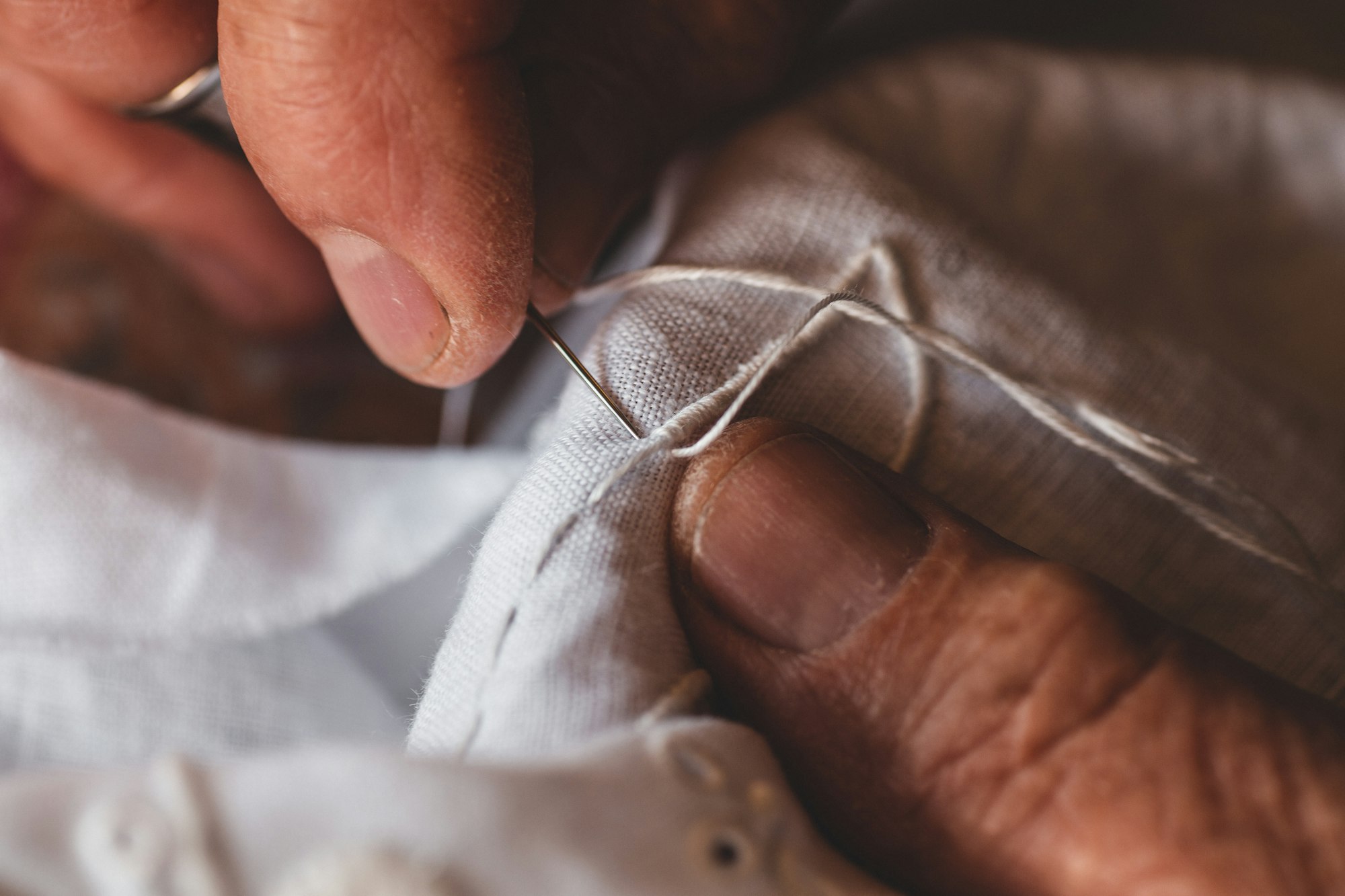
The inside of a garment is where corners get cut, and where real care shows.
5. The hem and the lining
A deep hem (two to four centimetres) hangs better and can be lengthened. On jackets and skirts, look for a lining that is cut slightly looser than the outer fabric and attached at the hem with small tabs, so the two layers move independently instead of pulling.
6. Ask the maker
This is where small labels shine. A founder can usually tell you exactly where the fabric came from, who sewed the piece and how to care for it. Send a DM and ask. A brand that’s proud of how it makes things will be happy to answer.
The 60-second version
- Light test and scrunch test on the fabric.
- Inside out: small, even stitches and tidy seams.
- Patterns that line up at the seams.
- Firm buttons, smooth zip.
- A deep hem.
None of these rules are absolute. Plenty of lovely pieces break one or two. But if a garment fails most of them, it’s unlikely to make it to next season, however good it looks on the hanger.
Know a small label that gets every one of these right? Tell us about it.
Photo: Elio Santos / Unsplash